Introduction
ISO 9001 internal audits aren't optional—Clause 9.2 of ISO 9001:2015 mandates that organizations plan, conduct, and retain documented evidence of internal audit results. The problem is that many quality teams still run these audits through email threads, shared spreadsheets, and paper checklists. That approach tends to collapse under the evidence demands of a Stage 2 certification audit or surveillance review.
The gaps show up fast. DNV specifically identifies failure to follow up on nonconformities and corrective actions as one of the most critical mistakes organizations make during ISO audits. Common failure points include:
- Missing or incomplete audit evidence
- CAPA records that stall between discovery and closure
- Findings with no traceable link to specific ISO clauses
Dedicated internal audit software closes these gaps by centralizing findings, linking CAPA records to audit clauses, and keeping evidence organized year-round — not just when a registrar visit is on the calendar.
This guide covers what ISO 9001 internal audit software is, the five best options available in 2026, and the key features to evaluate before committing to a platform.
TL;DR
- ISO 9001 internal audit software handles everything from scheduling and clause-mapped findings through CAPA closure and evidence storage—in one system
- The five best tools for 2026: SafetyCulture, TLM, MasterControl, ETQ Reliance, and Intelex
- Must-have features: clause-based tracking, integrated CAPA workflows, version-controlled documents, and multi-site dashboards
- Software alone doesn't guarantee certification—auditor training and documented procedures matter equally
- Choose based on team size, industry, and the number of ISO standards you're managing simultaneously
What Is ISO 9001 Internal Audit Software?
ISO 9001 internal audit software is a digital platform that helps organizations plan, execute, and document internal audits in alignment with Clause 9.2 of ISO 9001:2015. Audit scheduling, clause-level findings, evidence capture, and corrective action tracking all live in one place—not scattered across multiple tools.
The ISO Auditing Practices Group describes internal audits as a feedback mechanism for top management, which means the outputs need to be organized, traceable, and available on demand—not reconstructed from inboxes before a certification review.
Without dedicated software, quality teams typically patch together:
- Email chains for audit communications
- Shared folders for evidence and checklists
- Disconnected spreadsheets for findings and corrective actions
That works until a certification auditor asks to see your audit programme records, who owned each corrective action, and whether findings from 18 months ago were actually closed.
The tools reviewed below are evaluated on how well they close each of those gaps.
Best ISO 9001 Internal Audit Software in 2026
Each tool below was evaluated on how well it supports the full internal audit lifecycle: scheduling, clause-mapped findings, CAPA closure, and evidence traceability across audit cycles.
SafetyCulture
SafetyCulture (formerly iAuditor) is a widely used operations and compliance platform trusted across manufacturing, construction, and field-heavy industries. Its audit module is one of the most recognized tools for conducting ISO-related audits on mobile devices.
The standout feature is offline-capable mobile auditing. Auditors can conduct inspections, capture photos, add notes, and timestamp findings directly on iOS or Android without an internet connection. Progress stores locally and syncs automatically when connectivity is restored. Corrective actions can be assigned, tracked, and linked to findings without leaving the app.
| Feature | Details |
|---|---|
| Key Features | Mobile audits, customizable ISO 9001 checklists, corrective action tracking, real-time dashboards, offline functionality |
| Pricing | Free plan for teams up to 10; Premium at $24/seat/month (billed annually); $29/seat/month monthly |
| Platforms | iOS, Android, web browser |
Best for: Field-heavy industries where audits happen on the floor, not at a desk.
TLM (Total Lean Management)
TLM is a dedicated QMS and audit management platform built specifically for organizations running multi-standard, multi-location compliance programs. It supports ISO 9001, ISO 13485, ISO 14001, IATF 16949, ISO 17025, and more within a single system.
Unlike general inspection tools, TLM maps findings directly to ISO standard clauses and keeps them linked to CAPA records and controlled documents across audit cycles—not just within a single review.
That continuity matters in regulated industries like medical devices, automotive, and food safety, where certification auditors expect a traceable evidence chain spanning multiple years.
| Feature | Details |
|---|---|
| Key Features | Clause-based audit management, CAPA workflow integration, document control with version history, multi-standard and multi-site support, AI-powered compliance review, built-in audit templates |
| Pricing | 30-day free trial available; contact vendor for full pricing |
| Platforms | Cloud-based and on-premises; web browser |
Best for: Organizations managing multiple ISO standards across multiple locations who need audit continuity from one cycle to the next.
MasterControl
MasterControl is an enterprise-grade quality management platform widely used in regulated industries—pharmaceuticals, medical devices, and manufacturing—where document control, audit trails, and CAPA are foundational compliance requirements.
Document lifecycle management and CAPA are tightly connected throughout the platform. Revision histories, approval workflows, and structured corrective action processes integrate into a defensible end-to-end evidence chain from audit finding through closure. For organizations subject to FDA oversight or similar regulatory scrutiny, that traceability is a compliance requirement — not an optional feature.
| Feature | Details |
|---|---|
| Key Features | Document revision lifecycle management, CAPA automation with traceability, internal audit workflow, audit trail documentation |
| Pricing | Contact vendor for pricing |
| Platforms | Cloud-based; web browser |
Best for: Pharmaceutical, medical device, and life sciences organizations where regulatory audit trails are a compliance requirement, not just a preference.
ETQ Reliance
ETQ Reliance is a configurable QMS platform used by mid-to-large enterprises for automating quality processes across ISO 9001, ISO 14001, and other compliance frameworks. It offers over 40 configurable applications in a single cloud-native system.
Nonconformances link directly to CAPA for investigation and resolution, routing actions through structured review steps so issues don't stall between discovery and closure.
Audit planning and scheduling tools round out the platform, supporting repeatable internal audit programs with mobile and offline data collection.
| Feature | Details |
|---|---|
| Key Features | Automated CAPA workflows, audit scheduling and findings capture, audit trail preservation, risk-based planning, nonconformance management |
| Pricing | Contact vendor for pricing |
| Platforms | Cloud-based; web browser; mobile app available |
Best for: Mid-to-large enterprises that need a highly configurable platform with strong nonconformance-to-CAPA workflow automation.
Intelex
Intelex is a comprehensive EHS and QMS platform serving manufacturing, oil and gas, utilities, and healthcare organizations. It consolidates CAPA, document control, nonconformance tracking, and internal audit management in one governed system.
For organizations managing quality alongside environmental and safety compliance, Intelex removes the need to stitch together separate tools. ISO 9001 audit management, nonconformance capture, and corrective action workflows all operate within the same platform—reducing the administrative overhead of running parallel compliance programs.
| Feature | Details |
|---|---|
| Key Features | CAPA and action tracking, internal audit management, document control with searchable workflows, nonconformance tracking, multi-framework support |
| Pricing | Safety Essentials from $44/user/month (min. 25 users, billed annually); Advanced and Enterprise tiers require custom quote |
| Platforms | Cloud-based; web browser; mobile access |
Best for: Organizations that need to manage ISO 9001 quality compliance alongside EHS programs in a single integrated platform.
Key Features to Look for in ISO 9001 Internal Audit Software
Clause-Based Audit Tracking
ISO 9001 internal audits must cover the entire standard—Clauses 4 through 10—and findings need to be traceable to specific clause references. Software that logs findings at the clause level gives certification auditors a structured, organized record rather than a generic checklist output.
This is the single clearest dividing line between general inspection tools and true ISO 9001 audit software. A finding tagged to "Clause 8.5.1 – Control of production" means something specific to a certification auditor, while a finding labeled "Process issue" means very little.
CAPA Workflow Integration
Corrective and preventive action is the backbone of ISO 9001's continual improvement requirement under Clause 10. NQA notes that nonconformances identified during assessment must be accompanied by a corrective action plan completed within the timeframe advised by the auditor—and that timely closure directly affects certification outcomes.
Software must:
- Link findings directly to CAPA records at the point of creation
- Assign owners and due dates automatically
- Track root cause investigation status
- Maintain a closed-loop evidence trail from issue identification to verified closure
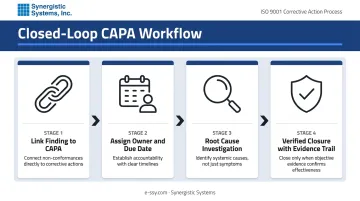
An untracked CAPA can escalate into a major nonconformance at your next surveillance visit.
Document Control with Version History
Auditors don't just check whether documents exist. They check whether the right version was in use at the time of the audit. Look for software that maintains:
- Controlled document versions with approval timestamps
- Full change history showing who revised what and when
- A defensible audit trail linking document versions to specific audit periods
Multi-Site and Multi-Standard Support
Organizations operating across multiple locations need audit software that consolidates compliance status across sites in a single view—not separate reports per location. This becomes critical when managing ISO 9001 alongside ISO 14001, ISO 45001, or industry-specific standards like IATF 16949 or ISO 13485.
Key capabilities to look for:
- Single dashboard showing open findings and CAPA status across all sites
- Audit scheduling that covers each location within the programme cycle
- One system for multiple standards rather than separate tools per framework
Reporting and Real-Time Dashboards
Audit readiness isn't a point-in-time effort. Quality managers need to see open findings, overdue CAPA actions, and upcoming audit schedules continuously—not scramble to compile status reports the week before a surveillance visit.
Software that surfaces this data continuously gives quality teams the lead time to close gaps—rather than discovering them alongside the registrar.
How We Chose the Best ISO 9001 Internal Audit Software
The tools on this list were assessed based on their alignment with ISO 9001 Clause 9 requirements—specifically their ability to support structured internal audit planning, clause-level findings management, CAPA workflow integration, and evidence traceability across multiple audit cycles.
A platform that excels at general inspections isn't necessarily built for ISO 9001—and a tool that can't track findings at the clause level or maintain linked CAPA records across audit cycles will create gaps that show up at your registration audit.
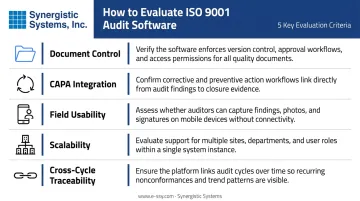
Each tool was evaluated on:
- Document control: version history, approval workflows, and role-based access to controlled documents
- CAPA integration: how findings link to corrective actions and whether those actions reach verified closure
- Field usability: whether auditors on the floor can use the tool, not just the QMS administrator
- Scalability: support for multiple sites and multiple ISO standards within a single system
- Cross-cycle traceability: findings that stay linked and searchable across years of audit history
Pricing model and mobile vs. web availability were also assessed, with particular weight given to tools that support both day-to-day internal audits and Stage 1/Stage 2 registration audit readiness.
Conclusion
Choosing ISO 9001 internal audit software is a quality system decision, not just a technology purchase. The right tool should reduce audit friction, keep evidence continuously organized, and support the kind of documented, clause-linked corrective action record that certification auditors expect to see.
Before committing to a platform, evaluate it against your specific program requirements:
- How many locations you're managing
- Which standards apply to your organization
- Team size and internal auditor capacity
- How the tool integrates with existing workflows
Run a pilot audit cycle with real CAPA records before expanding deployment. That test will surface gaps that a demo never will.
ISO/FDIS 9001 is currently in its final approval phase and expected to replace ISO 9001:2015 in September 2026. Any software you select now should be evaluated against its ability to adapt to the updated standard's requirements.
For organizations that want expert guidance on structuring their ISO 9001 internal audit program, the software is only part of the equation. The documented procedures, audit checklists, and auditor training behind it matter just as much. Synergistic Systems has spent over 25 years helping organizations in manufacturing, oil and gas, food and beverage, aerospace, and medical devices build internal audit programs that hold up under registration audits. Their cloud-based QMS intranet is included in every engagement, covering document control, CAPA management, audit records, and management review, with no separate software purchase required.
Frequently Asked Questions
What software do internal auditors use?
Internal auditors commonly use dedicated QMS or audit management platforms such as SafetyCulture, TLM, MasterControl, Intelex, or ETQ Reliance. The right choice depends on the team's specific needs — clause-based tracking, CAPA integration, mobile field access, or enterprise-level document control.
What is ISO 9001 internal audit software?
It's a digital tool that enables organizations to plan, conduct, and document internal audits in alignment with ISO 9001 Clause 9.2—keeping findings, evidence, and corrective actions organized and traceable in one system rather than across disconnected spreadsheets and folders.
What are the key features to look for in ISO 9001 audit software?
The most critical capabilities are clause-mapped audit tracking, integrated CAPA workflows, version-controlled document management, multi-site compliance dashboards, and real-time reporting on open findings and overdue actions.
How does ISO 9001 internal audit software support CAPA management?
Quality audit software links nonconformances directly to CAPA records at the point of discovery. From there, corrective actions route through structured workflows with assigned owners and due dates — maintaining a closed-loop evidence trail from finding to verified closure.
Can small businesses use ISO 9001 internal audit software?
Yes. Several platforms offer accessible entry points—SafetyCulture's free plan supports teams of up to 10 users—and even small organizations gain measurable value from audit software: consistent evidence trails, faster corrective action turnaround, and audit records that hold up under registrar scrutiny.
Do I need software to conduct ISO 9001 internal audits?
ISO 9001 doesn't mandate specific software, but organizations relying solely on spreadsheets and paper often struggle to maintain consistent evidence chains—particularly under certification audit pressure. Dedicated software removes that pressure by centralizing findings, actions, and closure evidence in one place your registrar can follow clearly.